Guide to Buying the Dip: Valuing Crypto with Cash Flows

Charlie Perkins, CFA

Zach PandlGrayscale Head of Research
Last Updated: 6/16/2026 | 31 min. read
Key Takeaways
Digital assets continue to gain relevance across the mainstream tech sector and the financial industry, but the asset class remains in an early stage of market development. The average age of the top 30 crypto assets is approximately 8 years, compared to the more than 100-year average lifespan for the constituents currently in the Dow Jones Industrial Average.[1] This relative nascency has contributed to persistent debate around how crypto assets should be categorized, regulated, and valued. As the market continues to evolve, clearer answers to these questions will likely help drive more efficient token pricing and support broader adoption of the asset class.
Grayscale Research believes this evolution warrants a more nuanced approach to digital asset valuation, including the application of frameworks drawn from traditional financial analysis. For any crypto investment, the first step is identifying the economic nature of the asset being analyzed: its primary use case, regulatory profile, competitive positioning, and potential value accrual mechanism. This analysis helps determine which valuation tools are most applicable to the project and how their outputs should be interpreted. Uniquely to digital assets, the relevant question is not only whether a protocol has product-market fit, but whether its governance, tokenomics, and capital allocation structure can convert business-level success into token-level value. This report provides an overview of how asset taxonomy, token value accrual, cash flows, and regulatory considerations are involved in protocol valuation, using the decentralized finance (DeFi) lending sector and Aave protocol as an example.
As centuries of traditional market operations have demonstrated, varying types of assets require a diverse set of valuation frameworks. Equities, commodities, currencies, and fixed income instruments each derive value from distinct economic drivers and are therefore analyzed through different lenses. Similarly, not all crypto assets should be valued using the same framework. While early crypto markets often treated tokens as a single broad category, investors increasingly distinguish between assets with different economic functions, ownership characteristics, and valuation drivers. Asset classification requires identifying the underlying factors that contribute to token value, such as monetary, liquidity, utility, governance, and cash flow-related premia.
Exhibit 1: Structural differences between commodities and financial claims
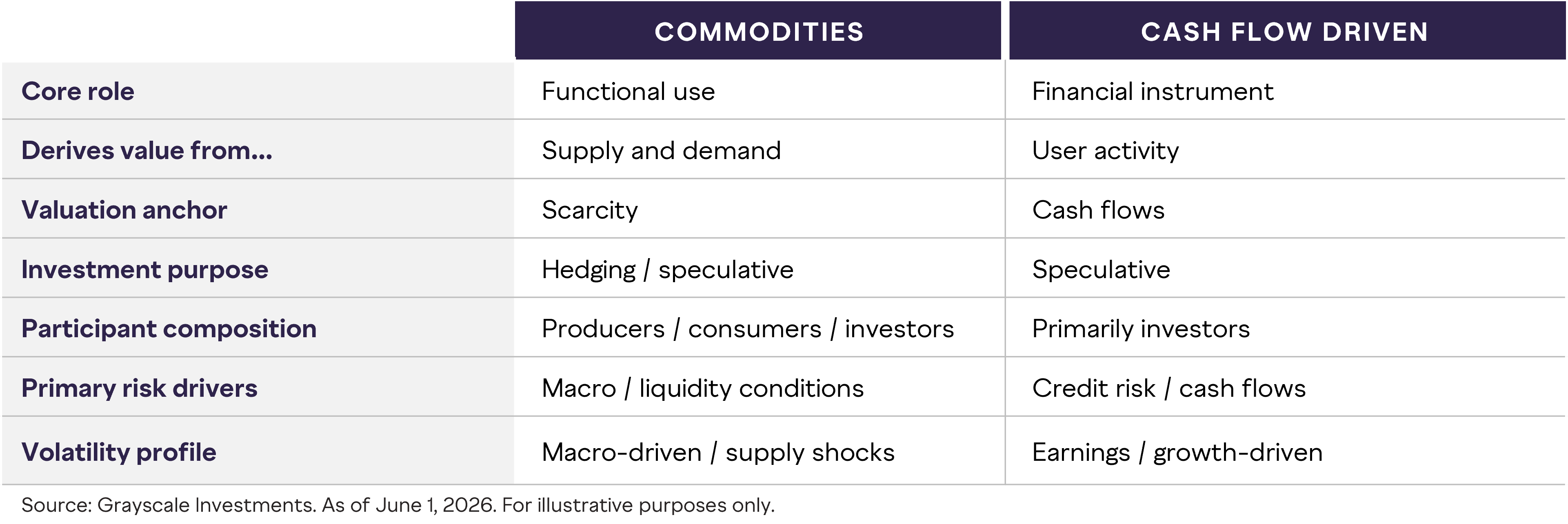
A useful starting point in asset taxonomy is the distinction between commodity-like assets and cash flow-oriented assets. Commodity-like assets generally do not represent a claim on future revenues or profits. Instead, their value is typically driven by scarcity, liquidity, security, adoption, and demand for their use as a medium of exchange, settlement asset, collateral, or store of value. Cash flow-oriented assets, by contrast, are more closely tied to the economic activity of an underlying protocol. Their value may depend on revenues, expenses, treasury assets, governance decisions, and the mechanisms through which protocol-level activity is converted into token holder value.
Exhibit 2: The spectrum from pure commodities to financial claims
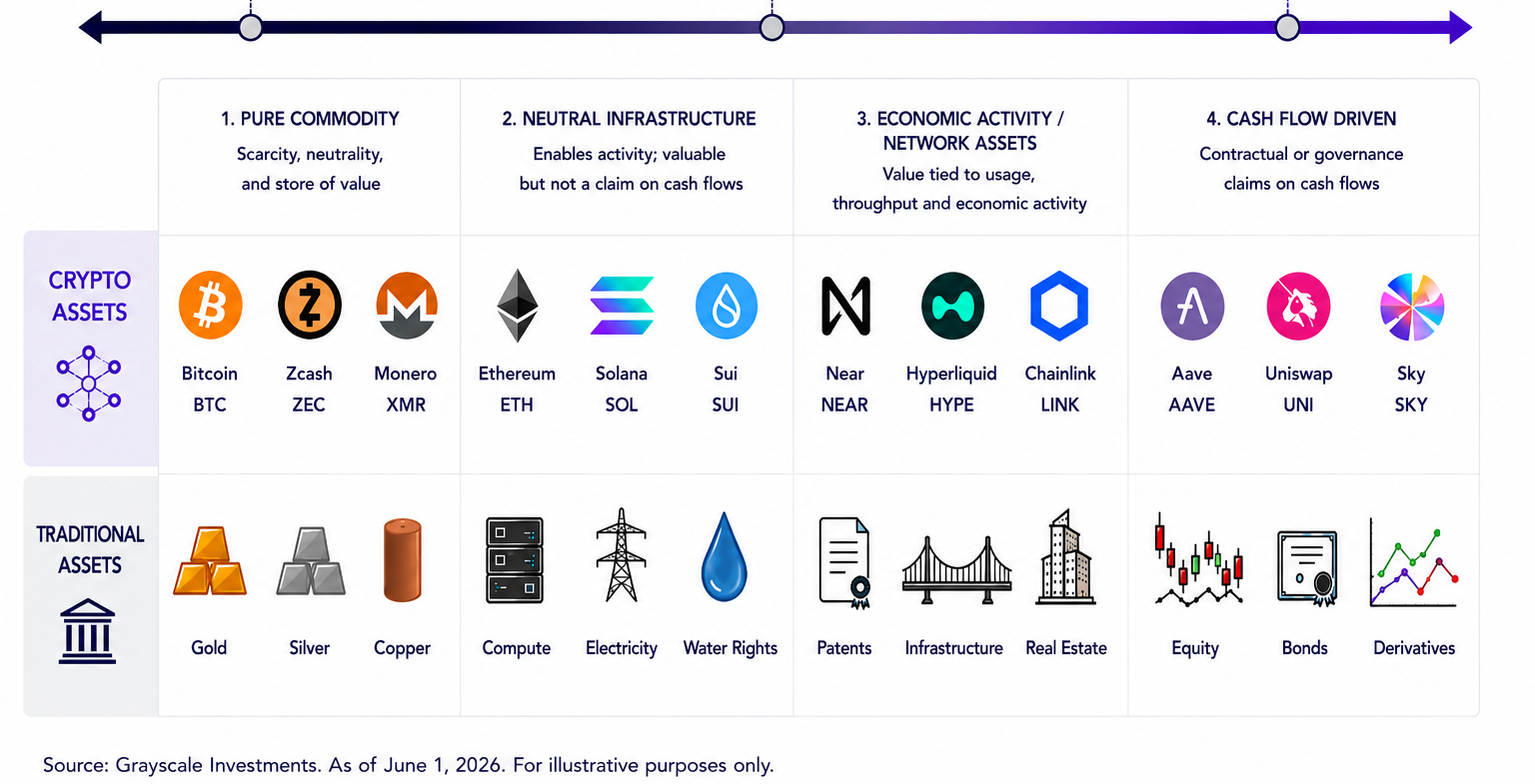
In practice, crypto assets are best viewed along a spectrum between these two bookends rather than as discrete categories. A reserve or settlement asset may warrant a fundamentally different valuation approach than a protocol token with recurring revenues, treasury assets, governance rights, and explicit value accrual mechanisms. Many tokens also combine multiple characteristics at once, requiring investors to assess which economic drivers are most relevant at a given stage of the protocol’s development. The appropriate valuation framework should therefore follow the economic substance of the asset, rather than the fact that it is represented onchain. As projects mature and markets shift, an asset’s position on the spectrum can move. This spectrum provides structure for valuation across digital assets and traditional financial markets alike, allowing comparable analysis to support more efficient pricing within and across asset classes.
DeFi protocols largely exemplify the cash flow-driven end of this spectrum, where protocol economics can be directly linked to token value and where traditional business valuation frameworks begin to apply, serving as a natural starting point for this analysis.
DeFi has become one of the clearest examples of blockchain applications generating real economic activity. DeFi protocols facilitate trading, borrowing, lending, collateral management, liquidity provisioning, risk transfer, and much more. These activities generate observable revenues from real users, creating a financial profile that is increasingly comparable to traditional financial companies, networks, and software platforms.
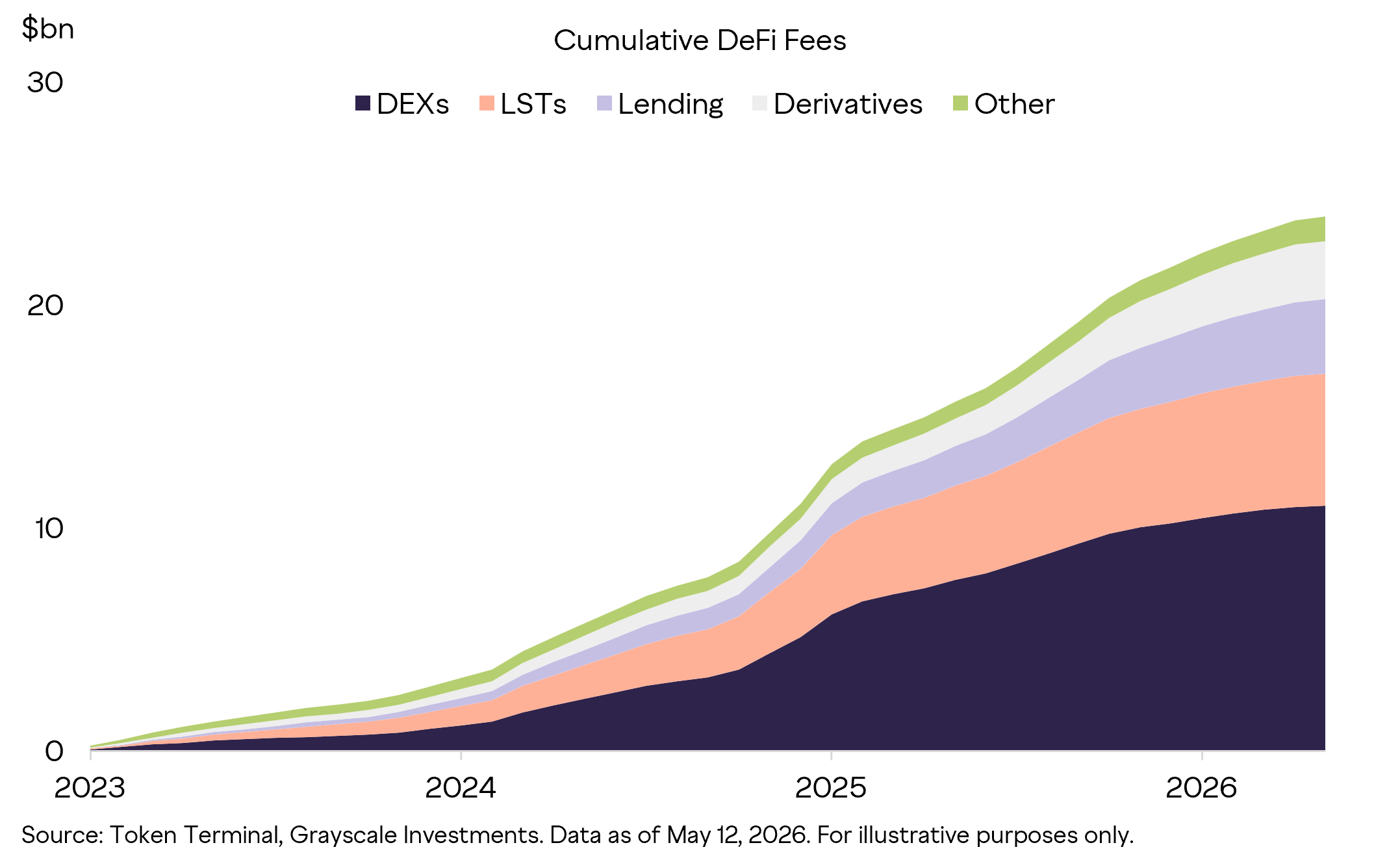
Since the beginning of 2023, DeFi protocols have generated nearly $25 billion in cumulative fees[2], with activity driven primarily by decentralized exchanges (DEXs), liquid staking (LSTs), lending, and derivatives. This revenue base demonstrates that DeFi has moved beyond speculative experimentation and now supports recurring financial activity across multiple verticals — although speculative trading remains an important driver. Many leading DeFi protocols also exhibit attractive operating characteristics, including high gross margins, limited capital expenditure requirements, and scalable software-driven business models.
Exhibit 3: Robust DeFi revenue continues substantial growth
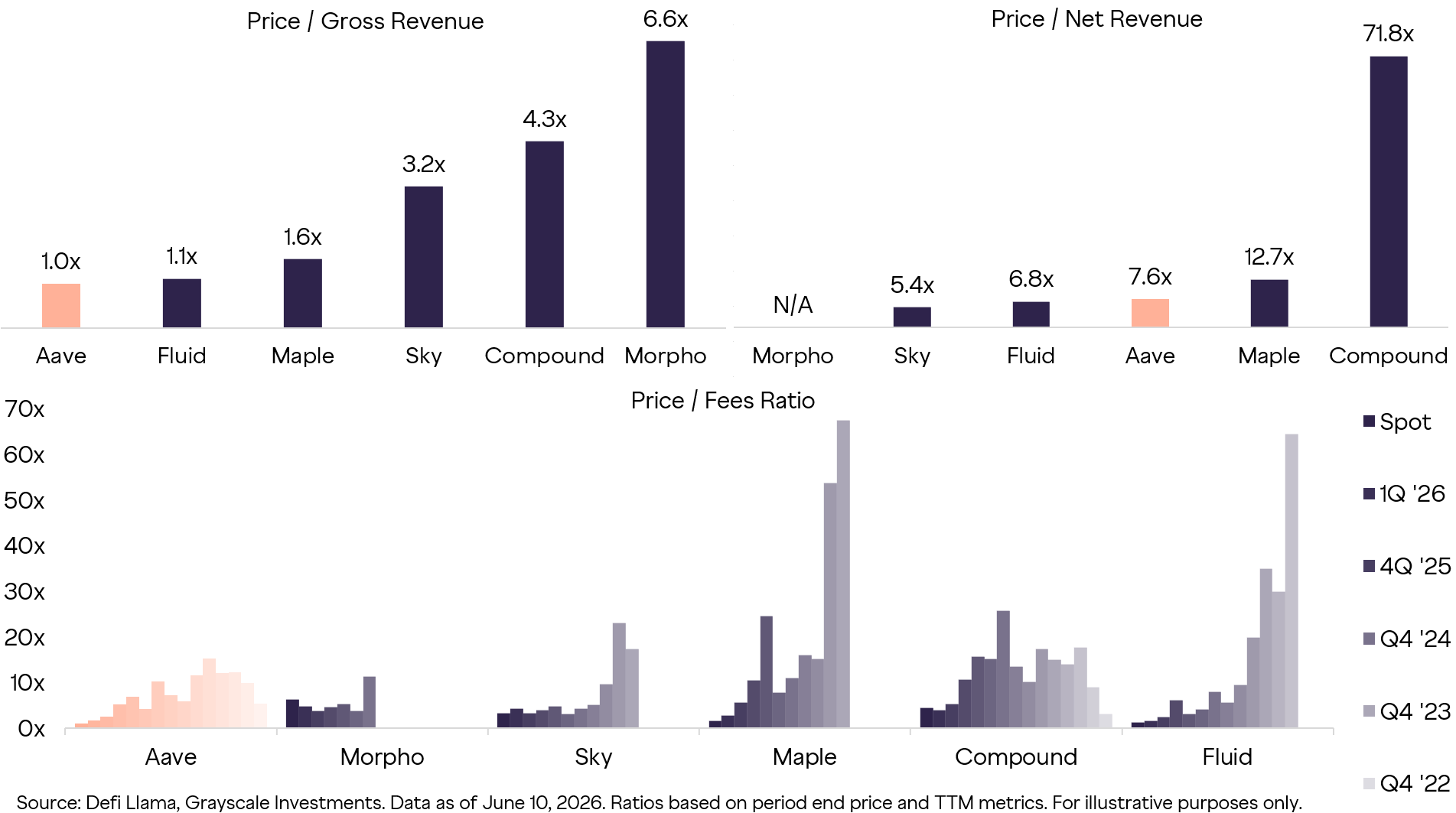
As crypto projects mature and continue producing observable, recurring financial metrics, valuation approaches can increasingly resemble traditional asset analysis. The DeFi lending sector is a strong example of consistent revenue generation from a durable business model. Gross revenue captures the overall fees generated by users, while net revenue isolates the portion of fees retained by the lending protocol. Analyzing both metrics is useful for understanding differences in business models and how top-line protocol activity ultimately flows through to investors.
Using the DeFi lending sector as an example, price multiples can help pinpoint value across comparable protocols. Multiples across the lending sector have shown meaningful compression across the board, indicating significant maturation within the market. Protocols have also succeeded with notable variations of business models. For example, Morpho vaults are growing exponentially, Sky’s onchain collateral-backed stablecoin has continued to find product-market fit, and Maple’s institutional focus has delivered strong risk-adjusted returns. The DeFi lending sector remains extremely competitive with many projects positioned to capture large growth over the coming years off the back of megatrends such as stablecoins and real-world asset (RWA) tokenization. As the market’s focus continues to shift toward revenue-generating protocols, lending applications will likely return to the spotlight.
Exhibit 4: Price multiples across DeFi lending cohort show market maturation
Aave stands out within this cohort as a useful case study due to its protocol economics having increasingly consolidated around explicit AAVE token holder value accrual, while the protocol continues to expand and upgrade deployments. Aave has remained dominant across multiple crypto cycles with clear tokenomics, though it is not immune to broader ecosystem risks. The April 2026 Kelp DAO rsETH exploit[3], while not a direct attack on Aave, created downstream market disruption that reduced protocol activity. Funds remained secure and the situation was quickly remediated, but lasting impacts remain. Token buybacks are currently paused pending governance review and total value locked (TVL) is meaningfully drawn down. Nevertheless, Aave's streamlined decision-making and transparency throughout the episode reinforce rather than undermine its institutional credibility.
Grayscale Research estimates the current fair value of the AAVE token to be $80-$100 based on the below DCF model and price multiples against comparable traditional companies. With a cemented position in the DeFi ecosystem and strong track record of growth, Aave showcases a durable business model with predictable income generation and robust capital resources for future growth opportunities. Forward success of Aave largely depends on DeFi lending competitor dynamics, regulatory clarity, and stablecoin/tokenization initiative execution — leading to meaningful AAVE token upside opportunities in a bull scenario.
Aave is a decentralized lending protocol that allows users to supply crypto assets to earn yield and borrow against posted collateral. Rather than relying on a traditional intermediary, Aave uses smart contracts to pool liquidity, set borrowing terms, manage collateral, and liquidate undercollateralized positions when necessary. In this model, depositors provide the funding base (e.g., USDC, ETH), borrowers create demand for credit, and the protocol earns revenue from interest spreads, fees, and related services. While nuances exist, Aave is often described as a permissionless onchain bank. This makes Aave one of the clearest DeFi analogues to a traditional financial company: it facilitates credit creation, generates recurring protocol revenue, and increasingly uses governance-approved mechanisms to return a portion of that economic value to AAVE token holders.
Exhibit 5: Aave’s large loan book facilitates onchain credit operations

Onchain credit creation is one of the most fundamental elements of the DeFi ecosystem. With over $59bn in deposits and $25bn of loans outstanding across all DeFi, onchain credit unlocks a broad range of opportunities.[4] Aave is the clear market leader, driving a significant share of total deposits, outstanding loans, and user activity. On USDC positions, Aave currently pays depositors 3.29% and charges borrowers 4.04%[5], providing attractive alternatives to even offchain rates. Averaging nearly 200k monthly users, Aave’s core role in DeFi positions the project to capture substantial market growth.
Exhibit 6: Aave facilitates continued usage; holds diversified corporate treasury

The Aave decentralized autonomous organization (DAO) stands out among competitors in part due to its large, diversified balance sheet, managed by token holder governance, which funds key growth initiatives. The Aave DAO acts as a coordination vehicle for governance and operations across the protocol functions. The DAO treasury has peaked at upwards of $360mm[6] largely due to AAVE appreciation and protocol revenue collections. Aave’s main revenue drivers include borrow/lend activity, treasury earnings, and GHO-related (native stablecoin) income. These cash flows accrue to the DAO treasury, which functions as the capital allocation vehicle for the protocol. From there, token governance votes determine how resources are spent on capital expenditures and AAVE token buybacks or accumulated in the DAO treasury for future initiatives.
Exhibit 7: Aave’s earnings flow from protocol to DAO capital allocations
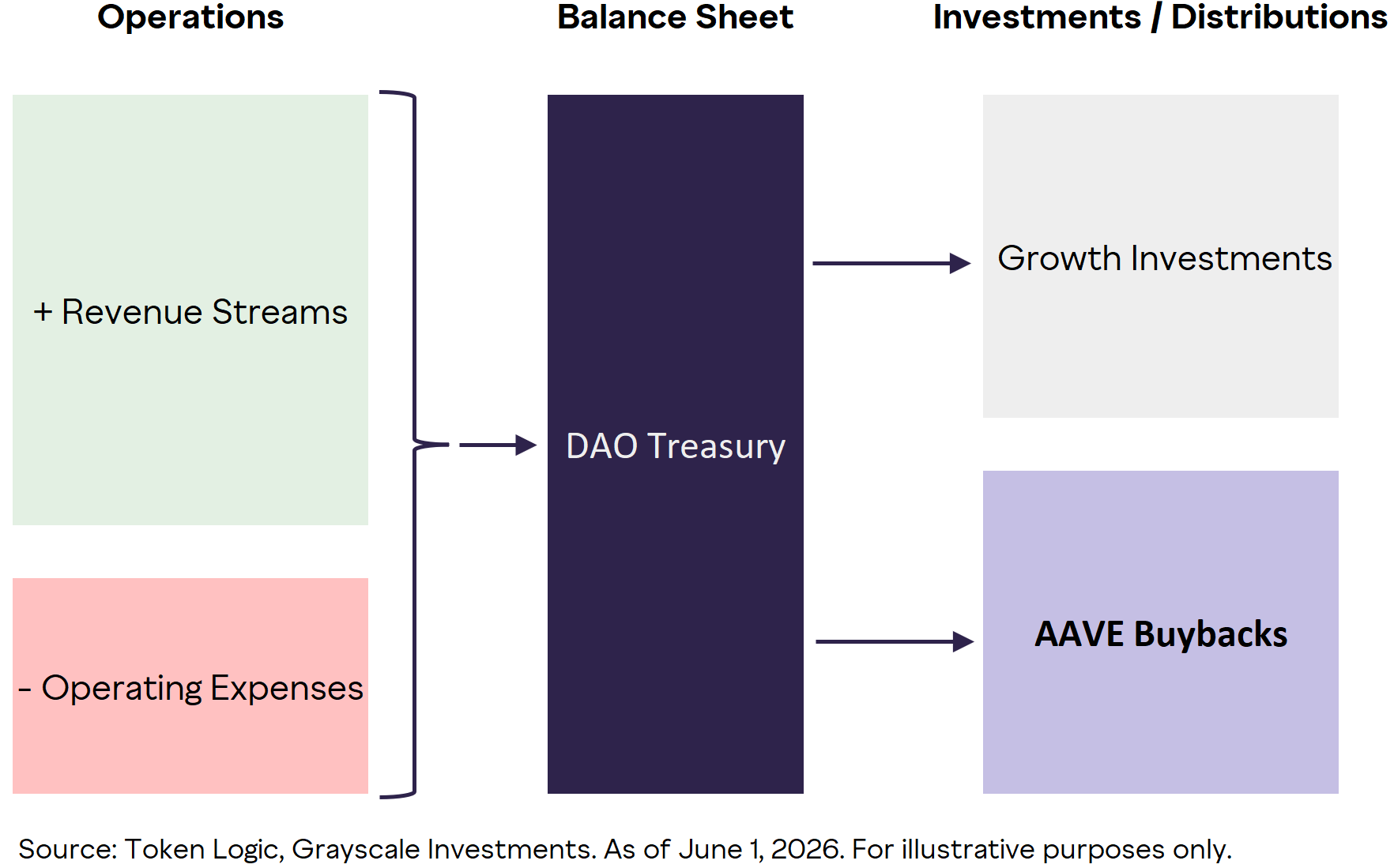
As shown below, Aave revenue increased more than 6.6x from 2023 to 2025. Protocol earnings have historically represented about 85% of total earnings and are primarily driven by the spread between borrow and lend rates. Additional protocol earnings include liquidation fees, flash loan fees, and partnership fees. GHO is an overcollateralized stablecoin issued by Aave with a circulating market cap of $283mm, generating fees that represent approximately 10% of revenue. The remaining revenue is generated from interest on treasury holdings.
Exhibit 8: Simplified Aave income statement
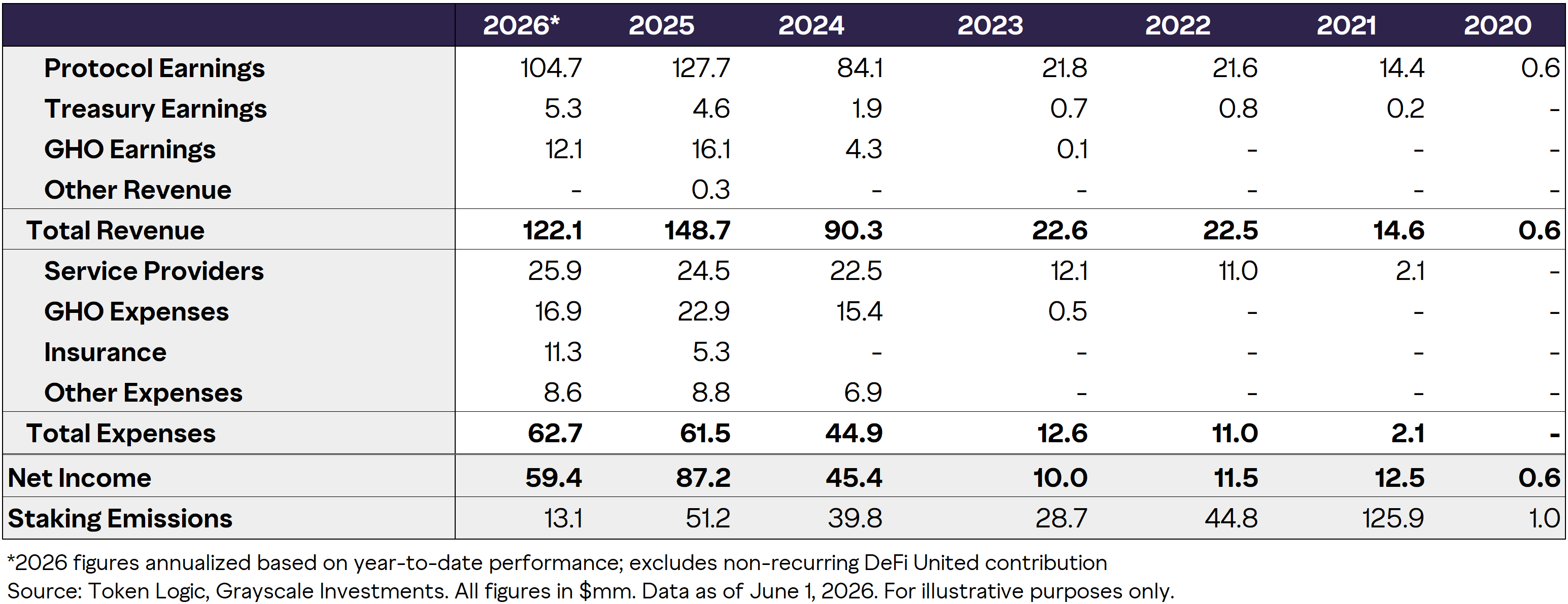
Expenses increased about 4.9x over the same period. Service providers are teams contracted to support and grow the Aave protocol, including developers, risk curators, governance facilitators, and other key contributors. GHO expenses largely include liquidity provisions and user incentives to support the stablecoin’s growth. Insurance outflows support Aave’s onchain risk management system, which can help backstop potential bad debt scenarios. Other Expenses include items related to partnerships, incentives, delegates, and security.
Aave currently operates at about a 50% margin, and is positioned to drive meaningful margin expansion as the protocol scales, given the efficiencies of onchain operations. With only a relatively small percentage of expenses being dedicated to ongoing operations, Aave continues to invest in future growth. At the current $75 spot price, the market is implying approximately 9% compounded annual earnings growth over 10 years, a figure that appears conservative relative to Aave's recent trajectory and the structural tailwinds from stablecoin adoption and RWA tokenization. For context, the S&P 500 has historically shown about 10-15% long-term EPS growth rate estimates and is currently pricing upwards of 20% consensus.[7] A scenario in which Aave grows earnings at 25% annually, roughly in line with leading fintech platforms during their expansion phases, would imply an AAVE price of $227. At 35%, the implied price rises to $444. The bear, base, and bull scenarios outlined below provide further structure around which growth assumptions are likely plausible given Aave's current product roadmap.
Exhibit 9: Implied AAVE cash flows based on $75 spot price
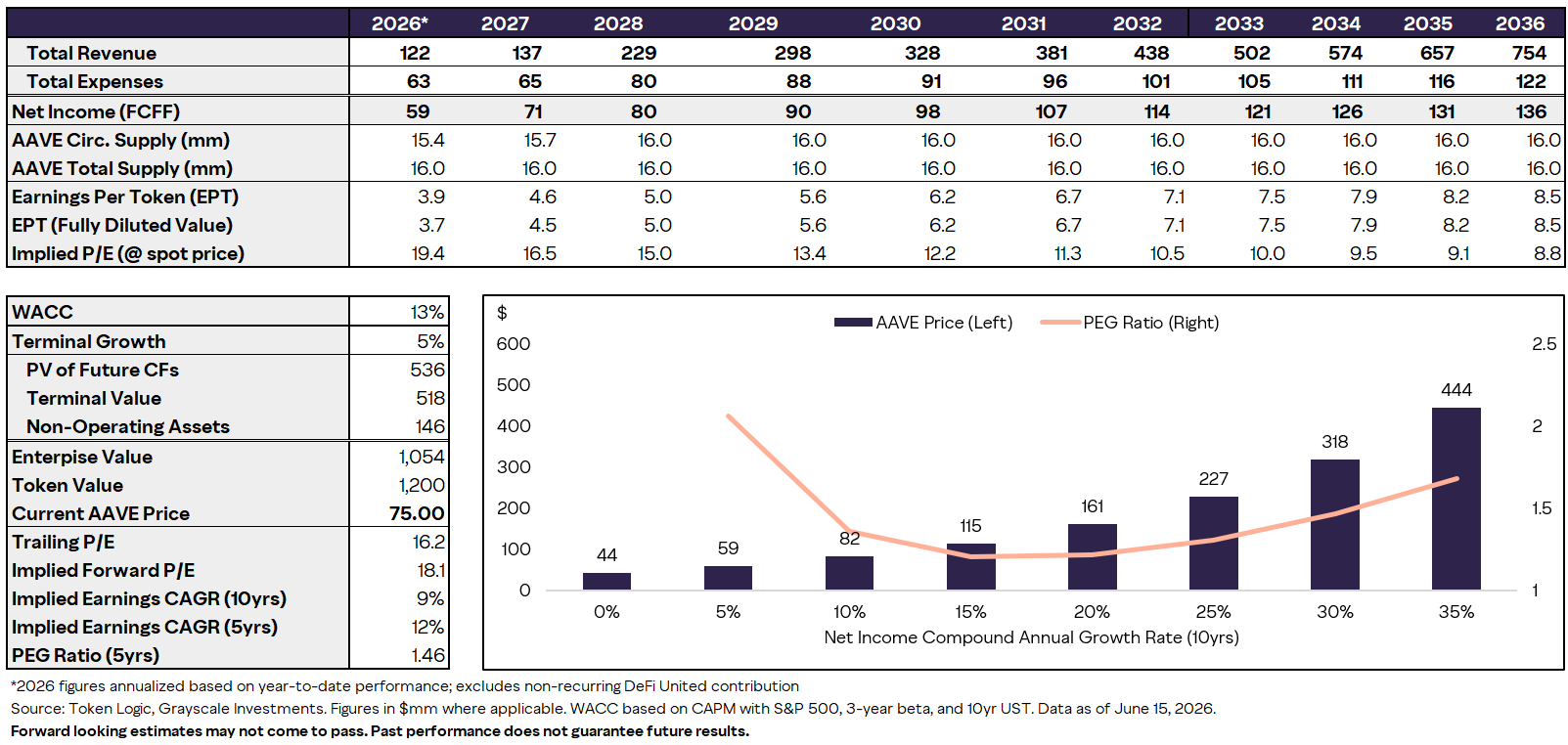
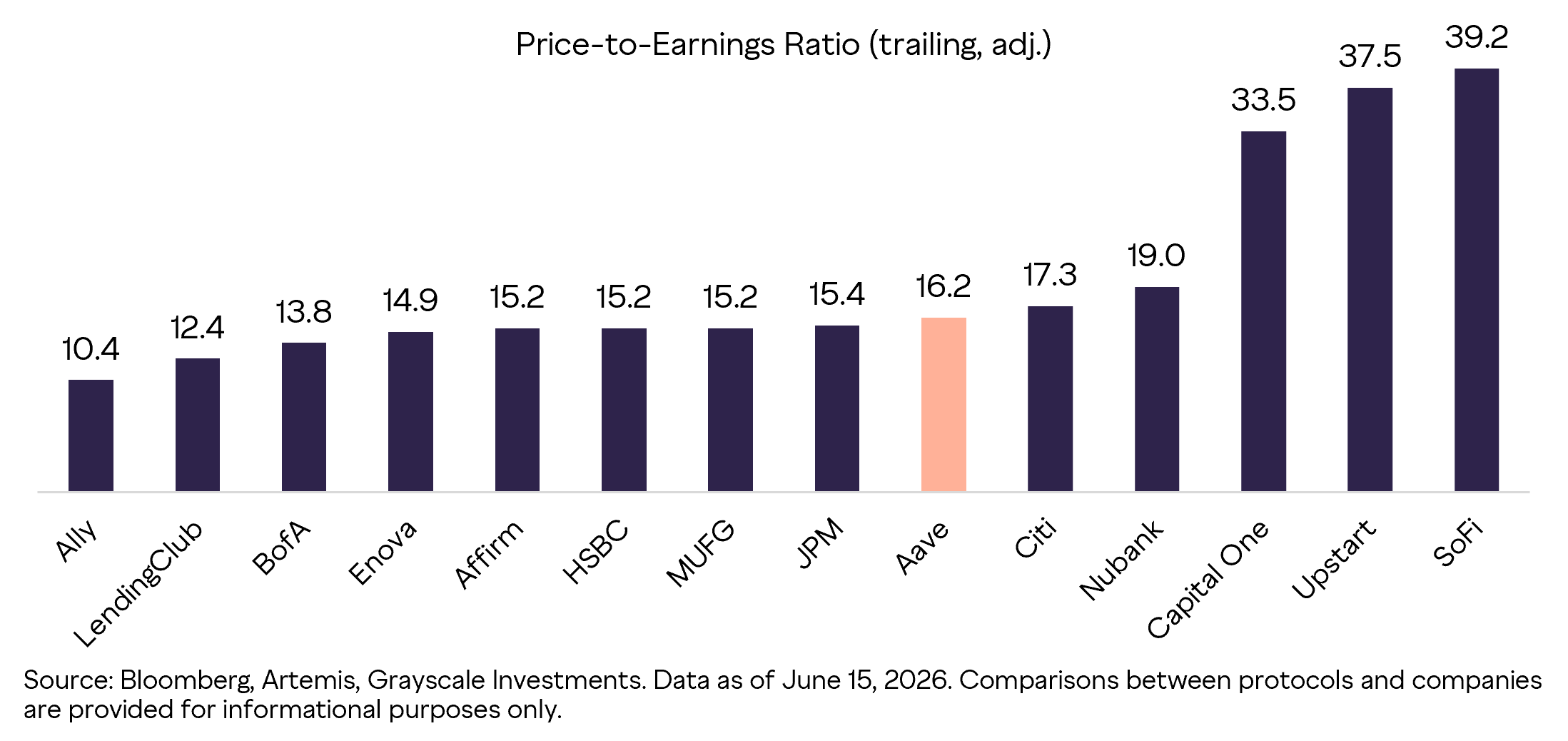
Based on an $75 AAVE spot price, the protocol’s trailing and forward price-to-earnings (P/E) ratios are 16.2x and 18.1x, respectively. For comparison, the S&P 500 currently trades at about a 24x trailing P/E multiple.[8] This places Aave between select large banks at 14.2x and fintech firms at 21.8x on an earnings-based valuation. Aave's deposit base, loan book, and interest income economics are structurally similar to the traditional lenders and fintech platforms in the table below, making earnings-based comparables a meaningful valuation input. The current valuation discount to fintech peers could reflect factors such as regulatory ambiguity and investor inefficiencies, and may compress as institutional participation and regulatory clarity improve.
Exhibit 10: Aave against comparable traditional companies
Aave's revenue has increasingly been anchored by stablecoin activity rather than volatile crypto assets, providing a more durable earnings base as the protocol scales. With stablecoin adoption and RWA tokenization representing significant structural tailwinds, Aave is well positioned to grow its loan book independent of broader crypto market cycles. Additionally, the following product initiatives represent the most meaningful near-term catalysts for AAVE token appreciation.
The following scenarios illustrate the range of outcomes for Aave's protocol and AAVE token price, with key assumptions driven primarily by stablecoin adoption, RWA tokenization traction, and institutional engagement.
Exhibit 11: Bear / Base / Bull scenarios for Aave protocol and AAVE token price
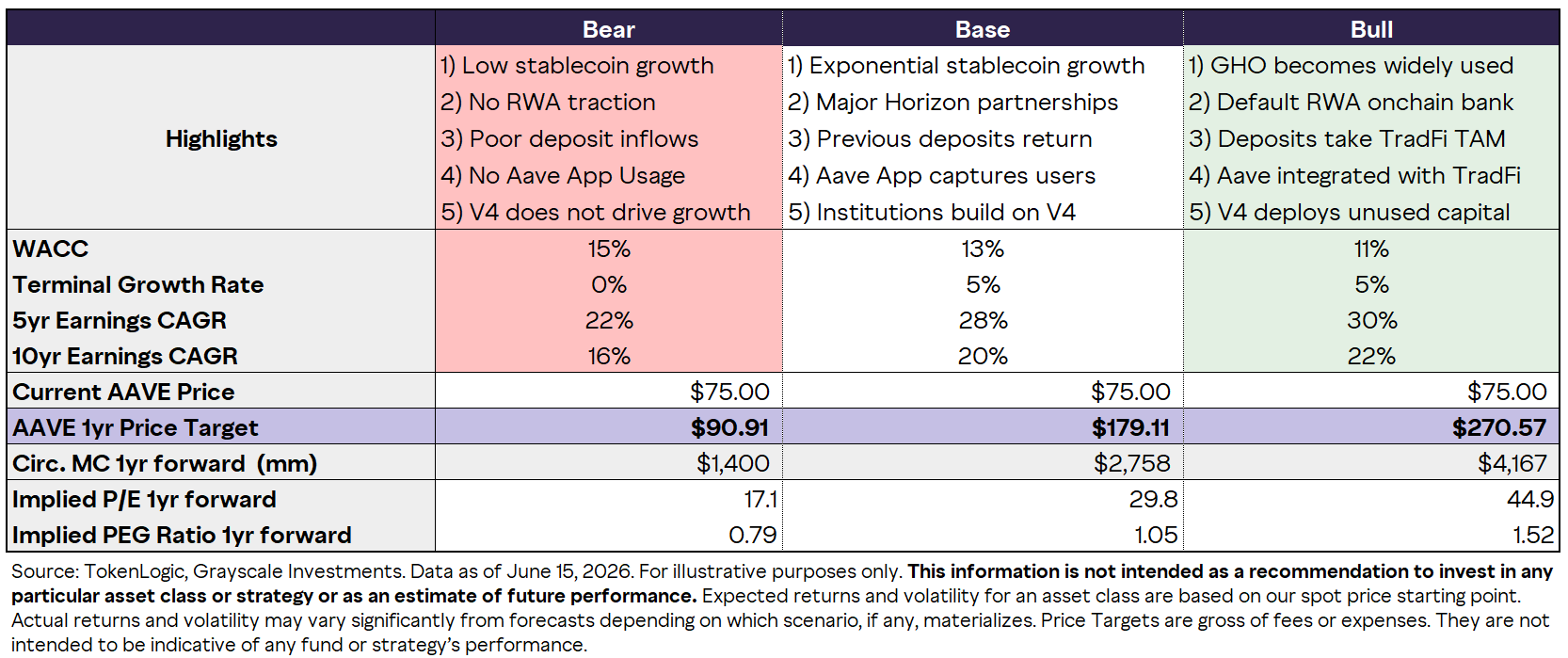
The scenarios above represent one-year price targets, with the wide range of outcomes driven primarily by macro-level uncertainty around stablecoin growth and institutional DeFi adoption. Aave's dominant market position within the DeFi ecosystem, diversified revenue base, and large treasury provide a degree of downside resiliency, supporting a favorable risk-reward profile across all three scenarios at current prices.
Aave’s recent governance evolution has strengthened the link between protocol economics and AAVE token holder value. Historically, Aave’s revenue streams supported a broad set of ecosystem needs, including service providers, incentives, safety costs, and growth initiatives, while token holder value accrual remained more indirect. Recent governance initiatives have increasingly consolidated these economics to benefit the DAO by reassessing service provider arrangements, clarifying ownership of protocol-related assets, introducing AAVE buybacks, and aligning capital allocation more explicitly around the token. This shift marked an important transition in Aave’s economic model: from funding protocol growth broadly to balancing reinvestment with disciplined, governance-approved value return to AAVE holders. Over the past two years, Aave has initiated buybacks (currently paused post rsETH exploit) and implemented the Aave Will Win (AWW) framework to route value to the DAO. While a complex and iterative process, aligning protocol and token holder incentives across projects is likely a necessary step in the next phase of crypto growth.
Exhibit 12: AAVE performance amid governance debate and value accrual alignment
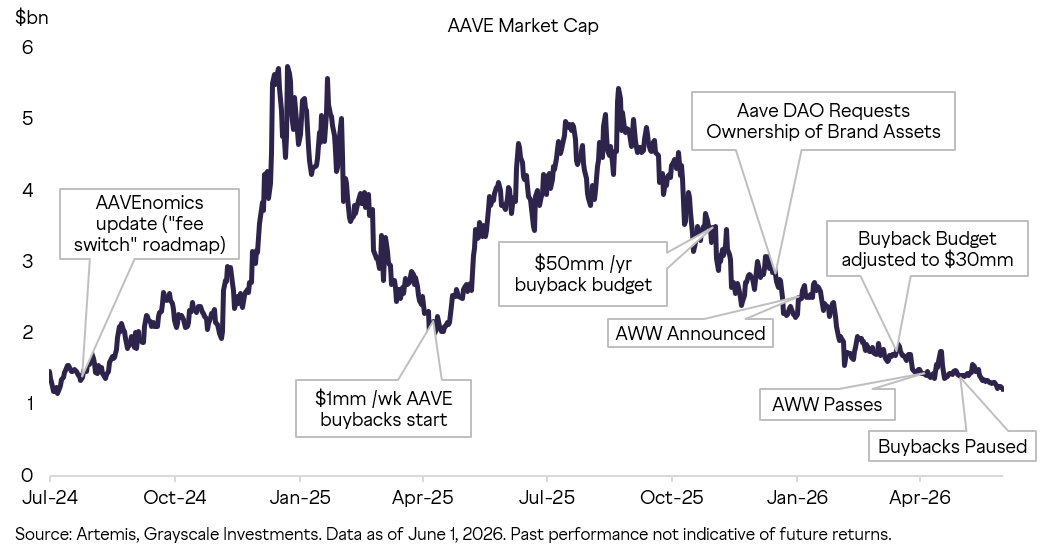
Protocol revenue alone is not sufficient to determine token value. In traditional equities, investors can generally analyze revenue, margins, and free cash flow through the lens of shareholder ownership and residual claims. In DeFi, the link between protocol economics and token holder value is less standardized. Fees may be retained by the protocol, distributed to supply side users, invested in growth initiatives, accumulated in a treasury, or redirected toward token holders through governance-approved mechanisms. DeFi value accrual is most commonly engineered through burns, buybacks, rebates, and staking.
Exhibit 13: DeFi protocol structures to drive token value accrual
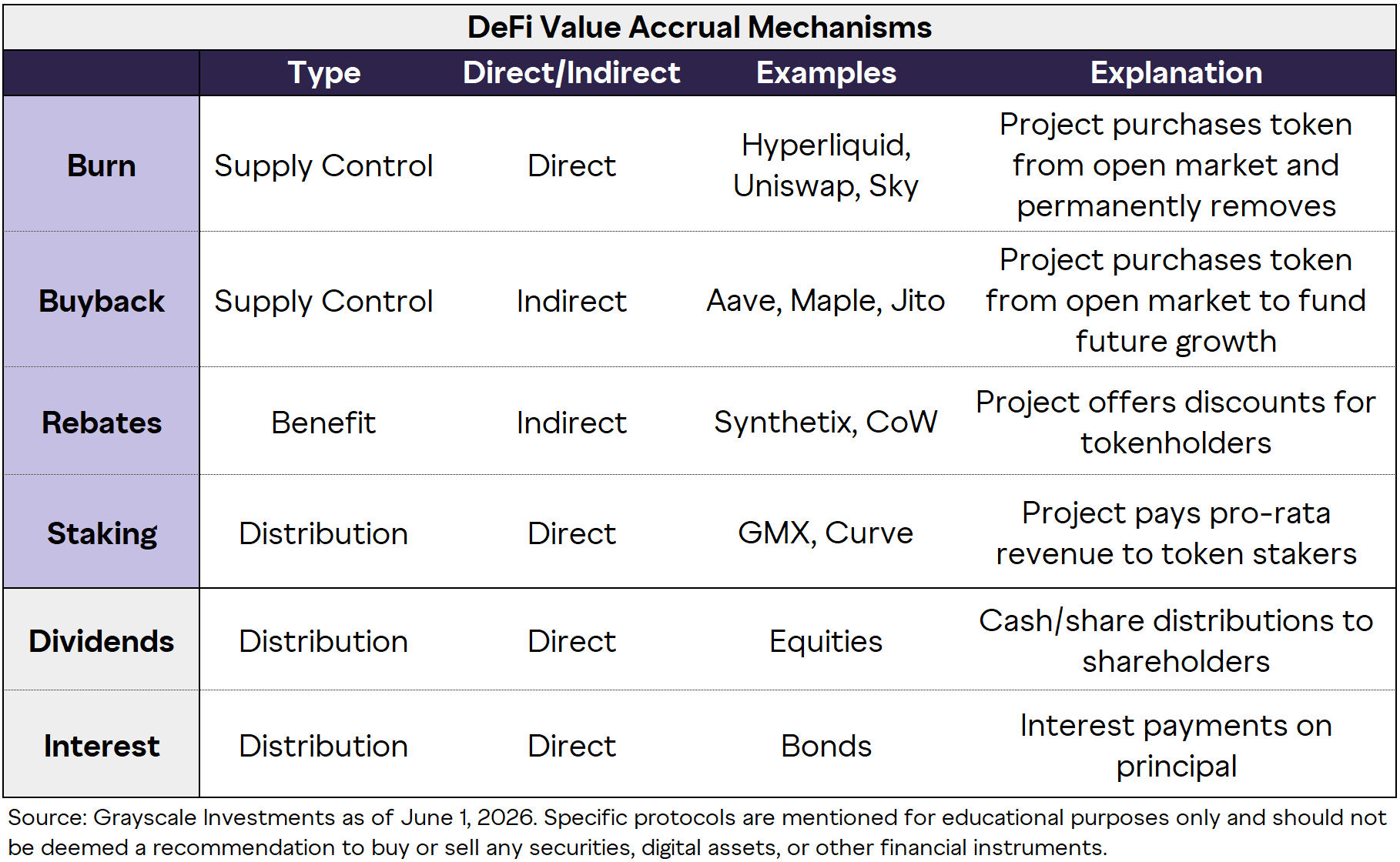
These mechanisms vary meaningfully in their directness, durability, and economic impact. Some protocols return value through explicit supply reduction or distributions, while others rely on more indirect utility-based benefits such as rebates or governance-controlled treasury allocation. This creates wide dispersion in the percentage of protocol revenue that ultimately reaches token holders. As a result, DeFi valuation requires more than measuring top-line protocol revenue; investors must also assess the conversion rate between protocol economics and token holder value. The stronger and more transparent this conversion mechanism, the more appropriate it becomes to evaluate a token using cash flow-oriented frameworks.
Not all protocol revenue is economically available to token holders. Fees generated by DeFi protocols may first be used to pay supply side users and cover operating expenses. As a result, protocol profit, rather than gross revenue, may provide a more relevant measure of the cash flows that can ultimately support token holder value accrual. Across DeFi, protocols vary meaningfully in both their ability to generate profit and their willingness to distribute that profit back to token holders. Much of this variance can be attributed to differences in fundamental business models across DeFi sectors.
Exhibit 14: Protocol profit is distributed back to token holders at varying rates
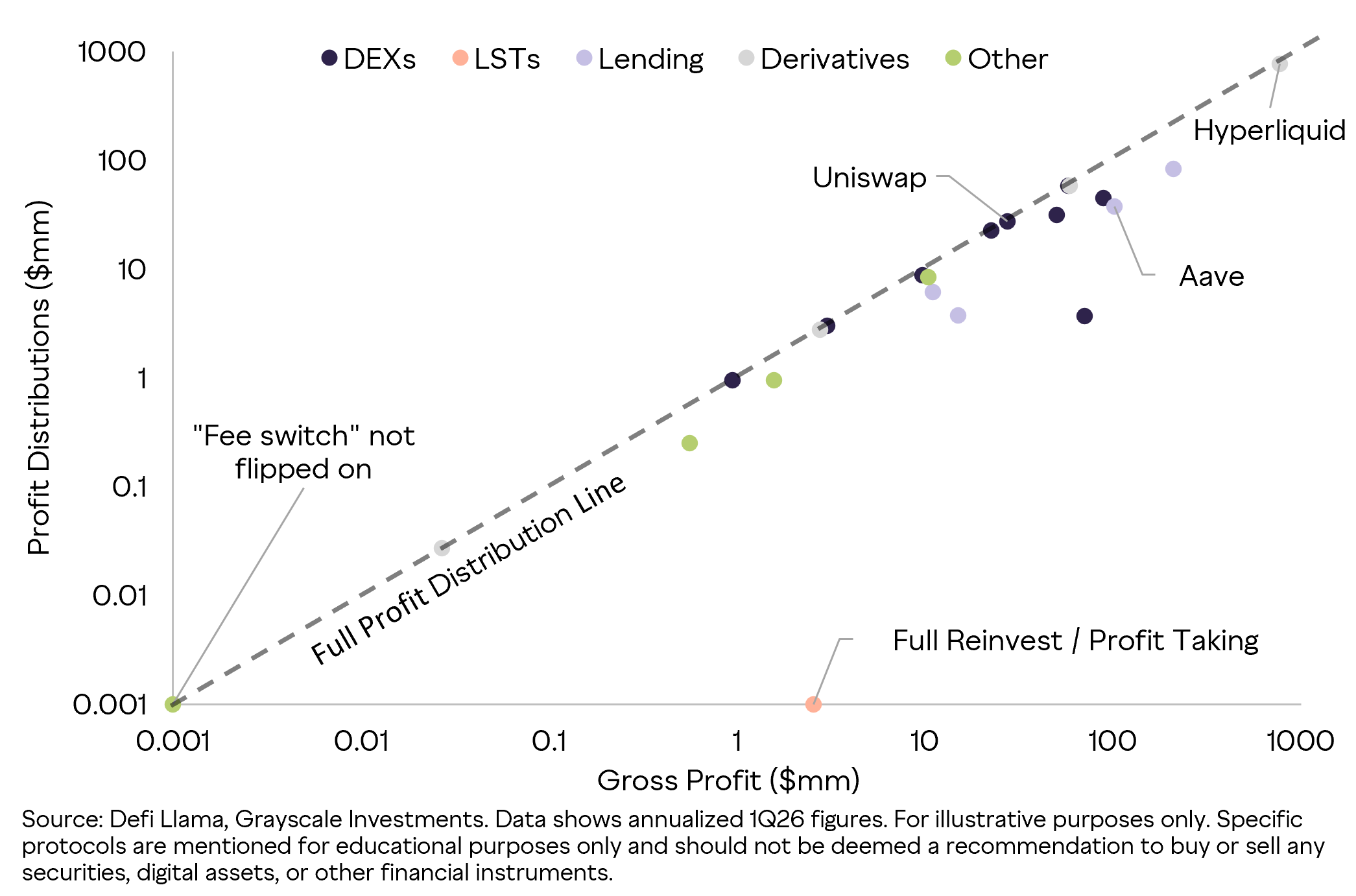
This dispersion highlights why DeFi tokens should not be valued on protocol revenue alone. Two protocols with similar fee generation may deliver very different outcomes for token holders depending on cost structure, governance decisions, treasury policy, and the specific value accrual mechanism in place. At the same time, a lower distribution rate is not necessarily negative if retained profits are being reinvested into initiatives that enhance long-term token value, such as liquidity, security, product development, user incentives, integrations, or ecosystem growth. Investors should therefore assess both sides of capital allocation: how much profit is returned to token holders today, and whether retained profits are being deployed at attractive rates of return. Protocols that combine meaningful profit generation, disciplined reinvestment, and transparent recurring token holder distributions may be more suitable for cash flow-based valuation frameworks, while protocols with weaker or more discretionary value transfer may warrant greater valuation discounts or alternative approaches.
A major remaining question across the crypto industry is whether token holders possess enforceable rights over the assets or cash flows associated with a protocol. In traditional equity markets, shareholders generally have defined governance rights, residual claims on corporate assets, and potential economic claims on future cash flows. By contrast, token holders often rely on a combination of smart contracts, DAO governance processes, treasury controls, and social consensus. In most cases, token ownership does not automatically create a pro-rata claim on protocol assets or a legally enforceable right to future revenues. However, the complete decentralization of a DAO aligns token holder incentives with protocol direction through transparent token voting.
This ambiguity has led a number of DAOs to adopt legal wrappers designed to provide legal personality, limit participant liability, and enable offchain activity such as contracting, hiring, treasury management, and intellectual property ownership. Common structures include LLCs, offshore foundations, special purpose trusts, and, more recently, Decentralized Unincorporated Nonprofit Associations (DUNAs). These structures can improve operational clarity and liability protection, but they do not necessarily transform governance tokens into equity-like claims. In most cases, token holder economics still depend on governance decisions and explicit value accrual mechanisms rather than default legal ownership rights.
Exhibit 15: How DAOs stack up against traditional legal entities
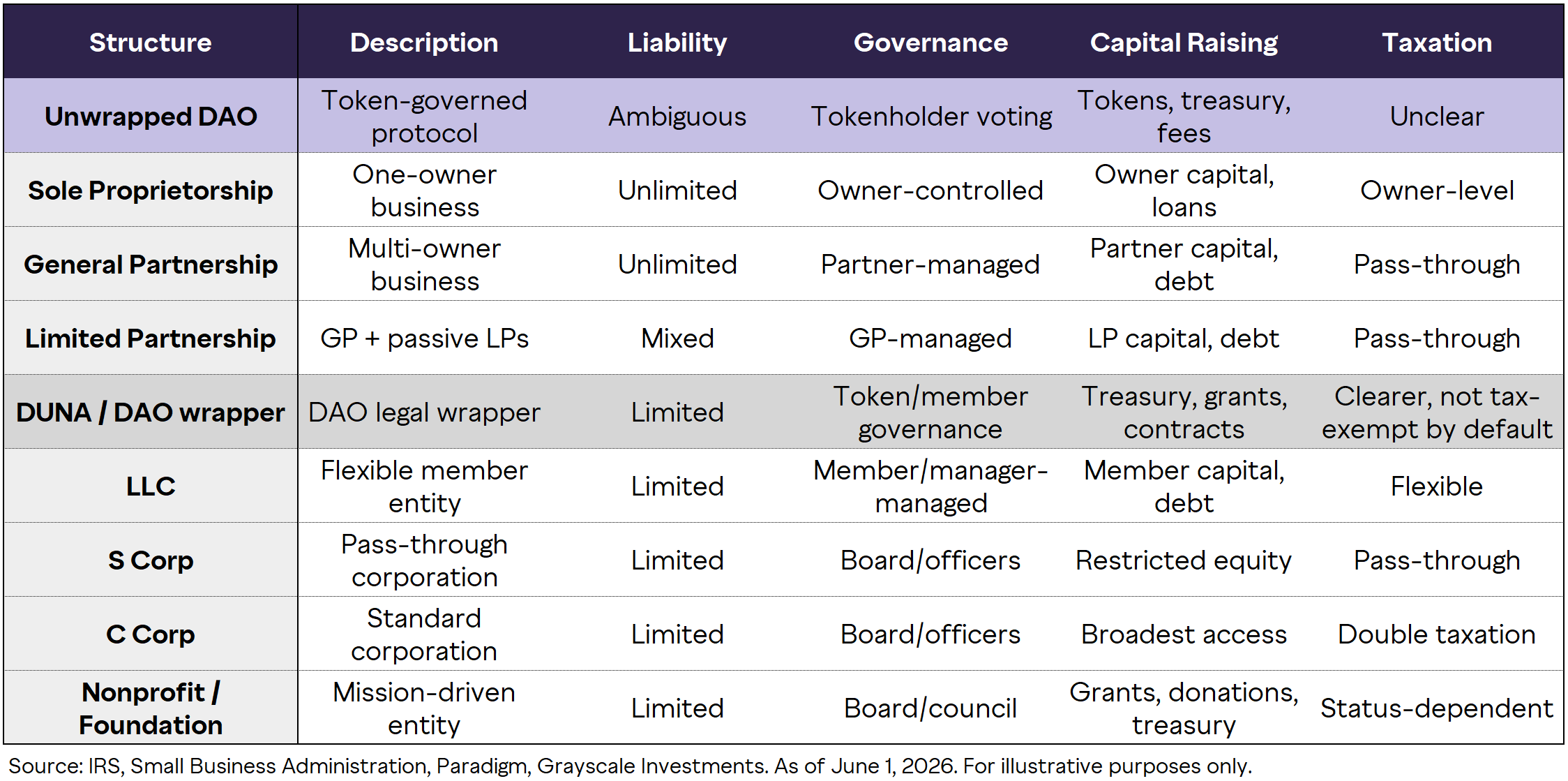
DAO governance can help address value accrual questions by giving token holders direct influence over protocol economics. In public equities, shareholders typically rely on management teams and boards to allocate capital, creating potential principal-agent conflicts when managerial incentives diverge from shareholder returns. By contrast, DAO-governed protocols allow token holders to vote directly on treasury management, fee parameters, incentives, buybacks, burns, and other aspects of the business. While this structure does not eliminate governance risks such as low voter participation, token concentration, or regulatory uncertainty, credible governance and explicit voting rights create a more direct link between protocol success and token holder value.
DAO legal and governance considerations are not merely theoretical; they are central to how DeFi tokens should be valued. DeFi protocols can generate observable revenues, but token holders may not have an automatic claim on those revenues in the way equity holders typically have claims on corporate residual value. As a result, the relevant valuation question shifts from “does the protocol generate revenue?” to “how, if at all, does protocol revenue accrue to the token?”
With prediction markets currently pricing a 51% chance of the CLARITY Act becoming signed into law in 2026, it becomes important to understand potential implications for DAOs. In its current form, CLARITY aims to define decentralization among crypto projects with the judgment largely based on factors such as governance concentration, upgrade/admin powers, and affiliate influence. The framework draws distinctions between network assets and tokens still tied to investment contracts, issuers, and affiliated control persons. Given that DAOs are decentralized by nature, focus centers around token holder concentration: who owns the votes. We believe mature DeFi projects such as Aave will likely meet standards to be classified as network assets; however, ambiguity remains.
As crypto markets mature, valuation frameworks are catching up to the underlying economics. Many leading protocols are now decisively implementing economics that drive protocol activity directly into token value accrual, and investors who apply rigorous, asset-appropriate frameworks may stand to benefit from any mispricing that persists in the interim. As regulatory clarity improves and institutional participation increases, market leadership has increasingly shifted toward sectors demonstrating tangible usage, durable business models, and observable financial fundamentals.
Exhibit 16: Crypto markets continue to reward protocols driving tangible value

The performance divergence shown above is not incidental. It reflects a broader repricing of crypto assets along the lines this report has outlined — away from narrative-driven speculation and toward protocols with tangible revenue, disciplined capital allocation, and transparent token holder value accrual. Aave exemplifies this transition: a protocol that has translated genuine product-market fit into a financial profile that increasingly warrants the same analytical analysis applied to traditional financial businesses. As this shift continues, the frameworks outlined here may become essential for evaluating the next generation of digital asset investments.
For investors seeking exposure to the next phase of crypto market development, the frameworks outlined in this report offer a starting point for identifying protocols where business-level success is being systematically converted into token value. Based on price multiple analysis detailed in this report, DeFi projects such as Hyperliquid, Aave, Uniswap, Sky, and Maple show signs of strong relative value. Grayscale Research continues to actively monitor the broader evolution of cash flow-driven crypto assets, and welcomes dialogue with counterparts navigating these opportunities.
[1] Source: Bloomberg, Company/token specific websites and filings
[2] Source: Token Terminal. As of May 12, 2026.
[3] https://governance.aave.com/t/rseth-incident-report-april-20-2026/24580
[4] Source: Artemis. As of June 1, 2026.
[5] Source: app.aave.com, V3 Ethereum market. As of May 26, 2026.
[6] https://aave.tokenlogic.xyz/financials/treasury
[7] https://www.yardeni.com/charts/global-index-briefings/msci-global-comparisons/strg-steg-lteg
[8] https://www.yardeni.com/charts/us-stock-market/stock-market-valuation/stock-market-p-e-ratios